Organization
You can fit what you need, but loose clothing makes items hard to find or repack.
Start with regular cubes.Travel · Carry-on
Choose a system around the constraint inside your carry-on: organization, soft-item bulk, clean/dirty separation, or a packing list that is simply too large.
START HERE
Name the constraint before choosing the cube.
Carry-on constraint decision map
Packing cubes can make a carry-on easier to use, but they do not create extra luggage capacity or change airline size or weight rules.
You can fit what you need, but loose clothing makes items hard to find or repack.
Start with regular cubes.Soft layers are taking up the room needed to close a fixed-size carry-on.
Consider compression.The problem is keeping worn clothing separate during the trip.
Give separation its own role.The bag is heavy, rigid items dominate, or the list is larger than the trip requires.
Reduce the list first.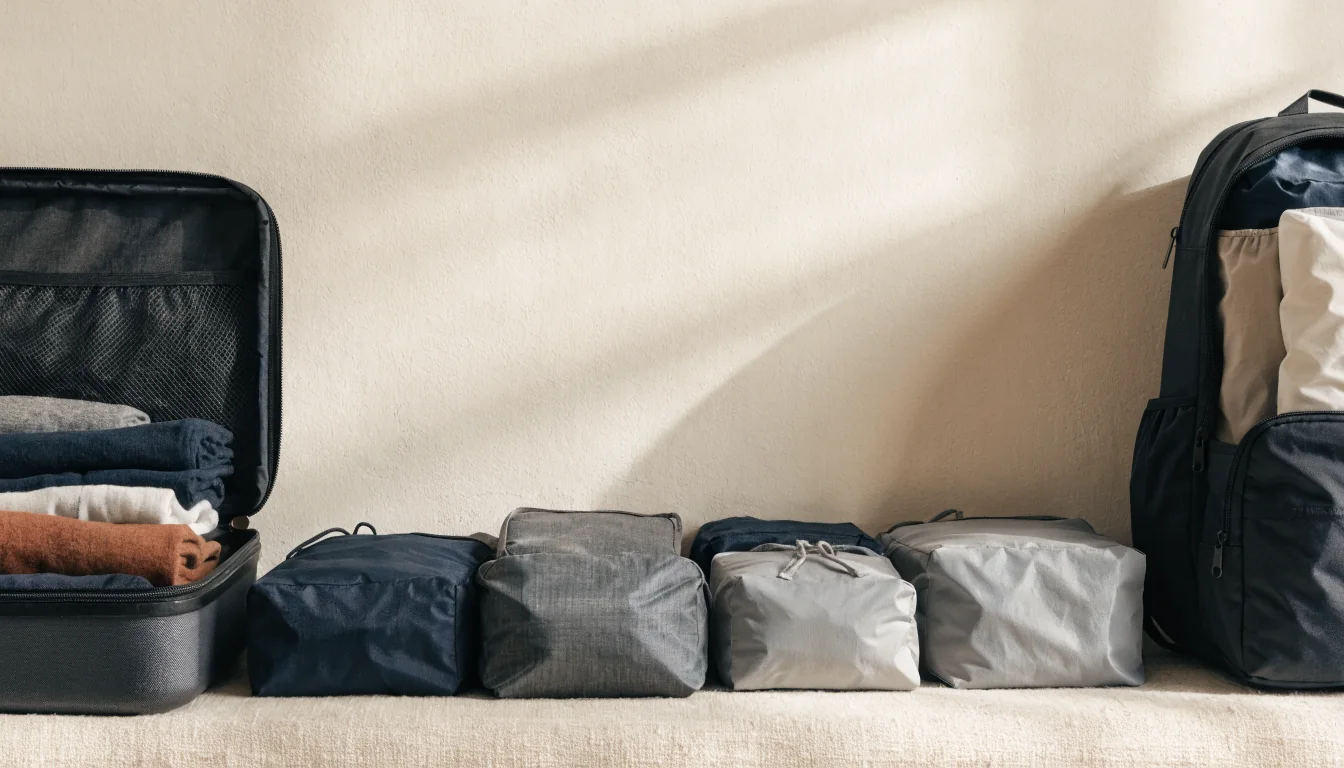
Regular vs compression
Compression can reduce the volume of suitable soft contents after packing; it does not make the clothing lighter. Compare regular and compression packing cubes for the detailed type decision.
Build a simple carry-on system
Use this as a starting structure, not a universal formula.
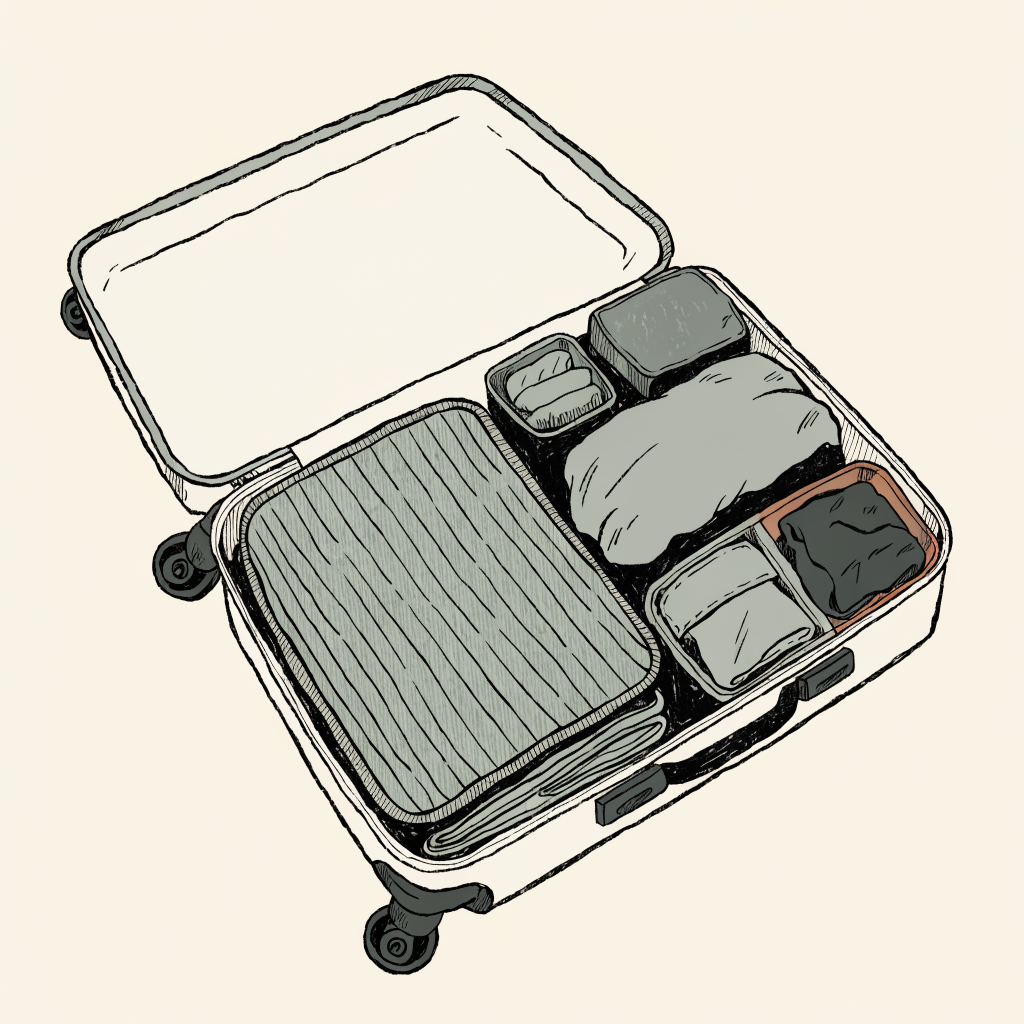
Keep the clothes you will use most often together.
Keep underwear, socks, or sleepwear easy to find.
Use only when bulky soft garments are the relevant constraint.
Use a divider cube or separate bag for worn laundry.
Product designs vary. Manufacturer descriptions of cube features are not independent Routine & Room performance testing.
Decision guardrail
If the real issue is weight, rigid or irregular gear, or a packing list that is larger than the trip requires, another cube will not solve the underlying constraint.
Pause before adding more organizers.
Reduce the list or use purpose-built protection where that is the actual need.
Next decision
A carry-on, travel backpack, and weekender bag create different packing layouts. Continue to the Bag Shape guide for the final geometry and product decision.
Editorial scope