Travel · Decision Guide
Packing Cubes by Bag Shape
When they organize better—and when they waste space.

Decision map
What is actually limiting your packing?
- 1Items mix together
Prioritize one or two category boundaries.
- 2A structured carry-on is close to full
Compression may be relevant; reassess access after packing.
- 3Your bag has irregular empty space
Keep that space usable; a rigid cube may not fit the task.
Choose by constraints, not by a universal winner
- Bag shape: structured rectangular carry-ons make stable layers easier; soft or tapered bags need more flexibility.
- Space constraint: choose compression only if the bag closes better after clothing is packed; it does not create a better access system by itself.
- Access pattern: one cube per complete category is easier to use than many tiny cubes.
- Trip pattern: multi-stop trips benefit from lift-out organization; a short trip with one clothing layer may not.
Bag shape decision map
What bag are you packing?
Start with the bag you are packing. Then choose the packing-cube setup that fits its shape and access needs.
Compact case / limited usable space.
Organize categories without losing usable space.
Prioritize: Access + clothing grouping.
See carry-on setup →
Travel backpackFlexible carry format.
Keep frequently needed categories reachable while the bag moves with you.
Prioritize: Access sequence + compartment logic.
See travel backpack setup →
Weekender / duffelWide, flexible main compartment.
Prevent categories from mixing and becoming difficult to retrieve.
Prioritize: Category separation + retrieval.
See weekender / duffel setup →

Access & packing priority
Fewer named categories
Clean / worn boundary
Only if closing is constrained
Lighter boundary
Types and trade-offs
Lightweight organizer
May fit when the bag’s shape is irregular and you want category separation with less added structure.
Trade-off: it will not deliver the same compression or set-based structure as a heavier compression system.
Compression cube
May fit when a structured bag is close to full and clothing bulk, rather than access, is the limiting factor.
Trade-off: a tighter cube can make mid-trip access and repacking less forgiving.
Structured multi-cube set
May fit when you want defined carry-on categories, including a separate clean/dirty boundary.
Trade-off: multiple pieces can be unnecessary for a small or irregularly shaped bag.
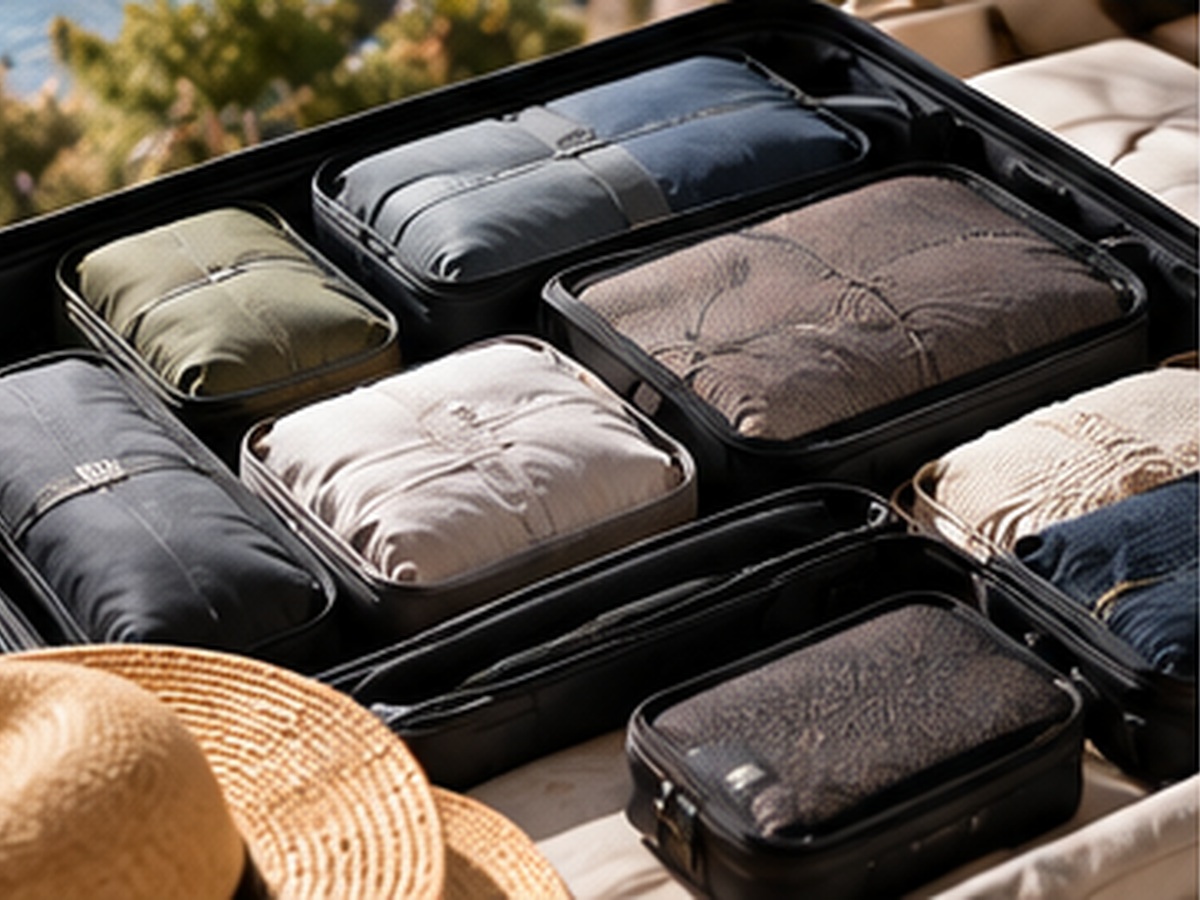
Comparison
Compare the fit, not a score.
| Option | May fit when | Consider another approach when |
|---|---|---|
| Peak Design Packing Cube, Medium | One contained category needs adjustable compression in a structured bag. | You need only a lightweight divider or your bag is very tapered. |
| Eagle Creek Pack-It Reveal Carry-On Set | Named carry-on layers and clean/dirty separation matter. | You have a very small bag, a one- or two-night trip, or prefer fewer pieces. |
Use case strip
Quick picks · Product decision modules
Two product paths, each for a different constraint.
Peak Design Packing Cube, Medium
May fit if: you use a structured bag and need to adjust clothing volume while keeping one category contained.
Trade-off: it may add more structure than a minimal divider, especially in a tapered bag.
Eagle Creek Pack-It Reveal Carry-On Set
May fit if: you pack a rectangular carry-on in named layers and want a distinct clean/dirty boundary.
Trade-off: several pieces may be unnecessary for a small bag or a short trip.
Choose by use case
Match the organization to the trip.
One category, changing volume
A single compression-oriented cube may fit when one clothing group needs a flexible boundary in a structured bag.
Multiple carry-on categories
A set may fit when you reliably use named layers and a separate clean/dirty category.
Short or irregular packing
Direct packing may fit better when the bag is small, tapered, or the clothing layer is already easy to manage.
Recommendation rationale
These are conditional recommendations, not a global ranking. Peak Design is the better fit when compression and adjustable single-category organization are the active constraints. Eagle Creek is the better fit when a structured carry-on, multiple clothing categories, and clean/dirty separation are the active constraints. Skip both if direct packing leaves more usable space in your bag.
How to test the decision at home
- Pack the actual clothing category, then close and lift your bag.
- Check whether the cube leaves wedges you can use or turns them into dead space.
- Remove the first-needed category without disturbing the rest.
- Choose fewer cubes if each one does not answer a specific access moment.
For airport access, see fast-access carry-on packing.
Find your fit
Start with the bag, not the cube.
Cubes can create stable, lift-out layers. Consider compression only when clothing bulk prevents the bag from closing.
Pack directly first. Rectangular cubes can leave wedges that are more useful without them.
A few named categories can reduce repacking. If you open everything at once, direct packing may be simpler.
Evidence scope and notes
Product-fit statements above are Routine & Room editorial inferences based on current Amazon merchant listing information for the named products, checked August 27, 2026. We did not conduct original hands-on testing. Product details, variants, and purchase terms can change; confirm the selected variation on Amazon before purchase. No volatile marketplace metrics or Amazon images are published here.
Read our affiliate disclosure and editorial policy.
Product decision module
Peak Design Packing Cube, Medium
Fit: This expandable/compression option may fit a traveler with a structured bag who needs to adjust clothing volume while keeping one defined category together.
Trade-off: It may not fit a traveler who only needs a minimal lightweight divider or whose very tapered bag benefits from softer, adaptable packing.
Evidence: Product-fit inference based on the merchant listing information identified below; no hands-on testing was conducted.
Product decision module
Eagle Creek Pack-It Reveal Carry-On Set
Fit: This set may fit a traveler who uses a rectangular carry-on in named layers and values a separate clean/dirty boundary.
Trade-off: It may not fit a one- or two-night trip, a very small bag, or a routine that works better with fewer pieces.
Evidence: Product-fit inference based on the merchant listing information identified below; no hands-on testing was conducted.
Where to buy
Check the exact variation before purchase.
Product details, variants, and purchase terms can change. Confirm the selected variation on Amazon before buying.