Temporary connection setup
Portable washer archetype
Compare portable washers designed for temporary faucet and sink-drain setups only after connection, drainage, electrical, and movement conditions are clear.
Renter appliance · decision guide
A portable washer can be useful in a small home, but the first question is not which model is “best.”
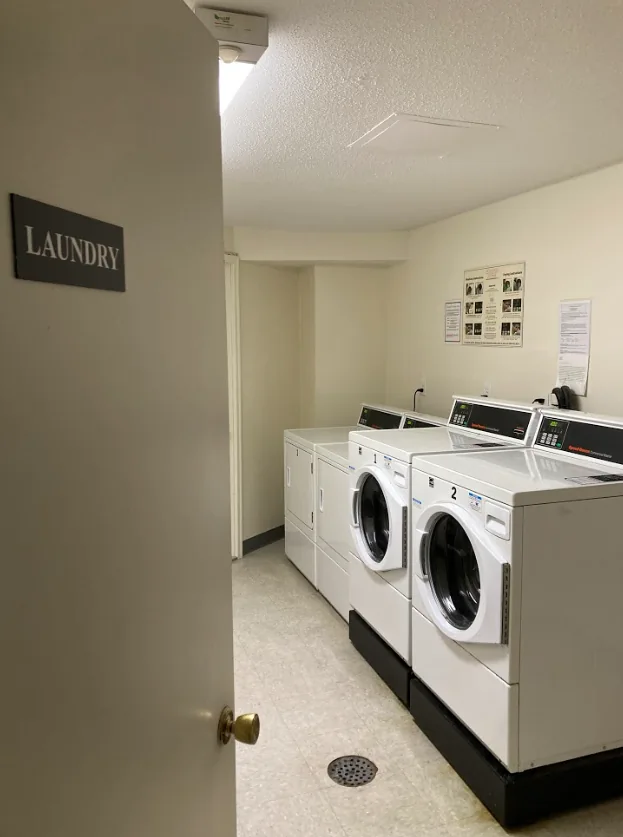
The first question is whether a specific machine can actually be connected, drained, powered, used, moved, and stored in your rental. Capacity and features matter only after the setup itself makes sense.
Quick decision
If one of those steps is still unclear, pause product comparison. A larger-capacity machine is not useful if it cannot be connected, drained, or stored in your space.
Feasibility flow
Capacity is a post-fit decision. A machine may look ideal on a product page, but that does not mean it fits your rental setup. A faucet may not accept the required connector. A sink may not be a practical drainage destination. The necessary outlet may not be in a workable location. Or the machine may fit in the room but not through the path needed to move and store it.
Start by eliminating setups that do not work in your home. Then compare the remaining machines by load size, wash frequency, mobility, and features.
01 · Property and rental constraints
Rules for indoor appliances, temporary water connections, floor protection, and responsibility for water damage can differ by building and lease.
Do not assume that a portable washer is permitted because it is smaller than a conventional washer. Check the documents and people that govern your specific home:
Manufacturer documentation can explain a machine’s setup requirements. It cannot establish that your landlord, property manager, or building permits that setup.
02–04 · Connection checks
| Check | What to confirm | State |
|---|---|---|
| Faucet | Removable aerator, connection and adapter requirements, hose route | Check model documentation |
| Drainage | Stable hose position, receiving sink, room-use conflict | Check model documentation |
| Electrical | Required voltage and circuit information, appropriate wall outlet, cord routing | Check model documentation |
For a portable washer that uses a temporary faucet connection, the faucet itself can decide whether the setup is possible. GE’s guidance for its applicable one-faucet connection setup identifies a removable aerator as a relevant condition for its connector system. That is a manufacturer-specific example—not a rule for every portable washer or every faucet.
A faucet that looks similar in a photo may not be compatible in practice. Use the product’s actual installation requirements.
“The hose reaches the sink” is not a complete drainage plan. You also need to consider the drain destination, how the hose will be secured, whether the sink will be occupied during use, and whether the route remains stable while water is being discharged.
GE’s model-specific guidance discusses drainage into a sink and presents a utility sink as a preferable example over a shallow bathroom sink for the referenced setup. That does not make any particular sink universally suitable. It shows why the drain destination deserves its own check.
Use the installation documentation for the exact machine you are considering. GE’s appliance guidance directs users of applicable products to an appropriate grounded wall outlet and cautions against assuming that an extension cord, surge protector, or multi-outlet adapter is an acceptable substitute. Those details remain manufacturer- and model-specific.
Do not treat a convenient outlet location as proof that the machine’s electrical requirements are met.
05 · Physical fit
A portable washer can technically fit in a room and still be impractical. A simple floor-tape outline can help you test the footprint before buying. This is a planning method, not a performance claim: it helps reveal whether the machine will block a door, crowd a walkway, or be difficult to return to storage.
06 · Product archetypes
Temporary connection setup
Compare portable washers designed for temporary faucet and sink-drain setups only after connection, drainage, electrical, and movement conditions are clear.
Documentation-first setup
Compare models with clearly documented power, drainage, dimension, and installation requirements against the actual rental.
Candidate after rental-fit checks
Consider this candidate only after the property, faucet, drainage, electrical, movement, and storage checks are resolved against the exact model documentation.
View on Amazon Affiliate linkFinal checklist
Evidence and limitations
This guide uses manufacturer documentation as an example of the questions a renter should ask before choosing a portable washer. Manufacturer documentation does not establish lease permission or universal plumbing or electrical suitability. Confirm the requirements of the exact machine, property, and setup you intend to use.
Affiliate links are active for the named product candidate. Read the affiliate disclosure and Amazon Associate identification.