Routine & Room

Cooking decision guide

I only want one everyday frying pan — which type fits the way I actually cook?

Start with the food and friction you repeat. The useful answer is rarely a universal “best” pan.

Start here: name the job you need the pan to make easier.

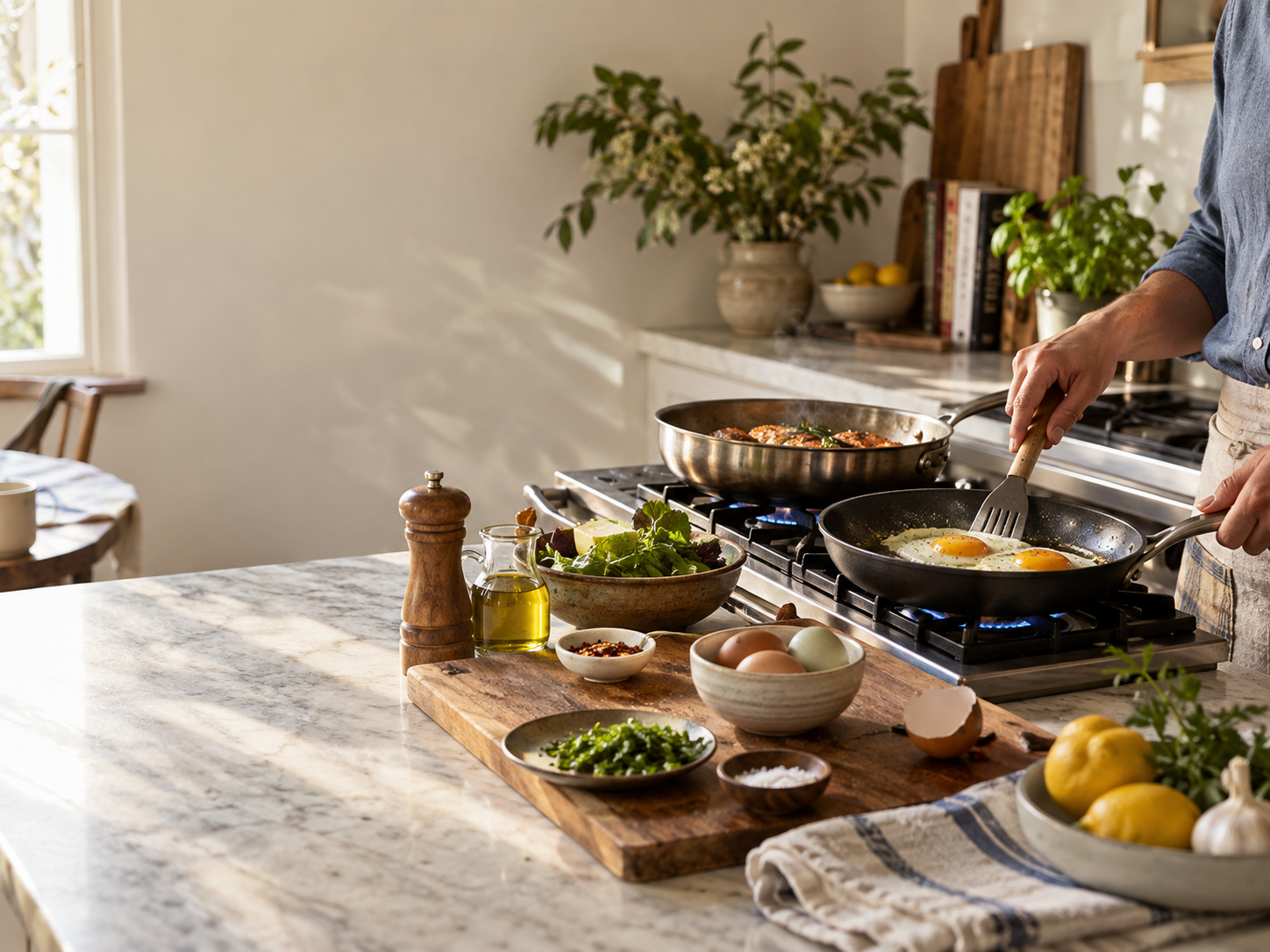
Editorial kitchen scene showing a home cook using two generic frying pans for eggs and browned food; not an image of a linked product.

What actually matters

Five repeat-use cues beat a feature list.

Notice which inconvenience you want to remove. That points to a material tradeoff more reliably than a single “premium” label.

Delicate foods Eggs and fish reward easy release.

Browned edges Searing asks more of heat and technique.

Replacement fatigue Coatings and bare metals age differently.

Weight & care Drying, oiling, and lifting are real constraints.

Chemistry preference Terms on a label do not always mean the same thing.

A calm chemistry note

PTFE, PFOA, PFOS, and PFAS are not interchangeable terms.

PTFE is a fluoropolymer used in traditional nonstick coatings. PFOA / PFOS are specific PFAS substances, so a “PFOA/PFOS-free” label is not a complete chemistry description. PFAS is a broader family term that includes many substances.

FDA says highly polymerized PFAS coatings authorized for cookware show negligible migration to food under intended use. Intended use is different from excessive empty-pan overheating: avoid inappropriate high heat and follow the pan’s care guidance. If you prefer to avoid fluoropolymer coatings, choose the material path that fits that preference.

For the ceramic option below, Tramontina specifically states that its ceramic cookware is made without intentionally added PTFE, PFOA, PFAS, lead, and cadmium. That is a manufacturer statement about this ceramic cookware—not a claim about every ceramic pan.

Conditional product choices

Four products, four different reasons to choose.

Traditional nonstick

Best for · eggs, fish, delicate foods, easy release

Tramontina Professional 12-Inch Nonstick

Why this type: Heavy-gauge aluminum with reinforced nonstick; designed for food release and cleanup. For gas, electric, and ceramic-glass cooktops; oven safe to 400°F / 204°C.

Routine & Room analysis: A straightforward path when delicate foods and less cleanup friction are the daily job. Treat high empty-pan heat as the tradeoff, not a loophole.
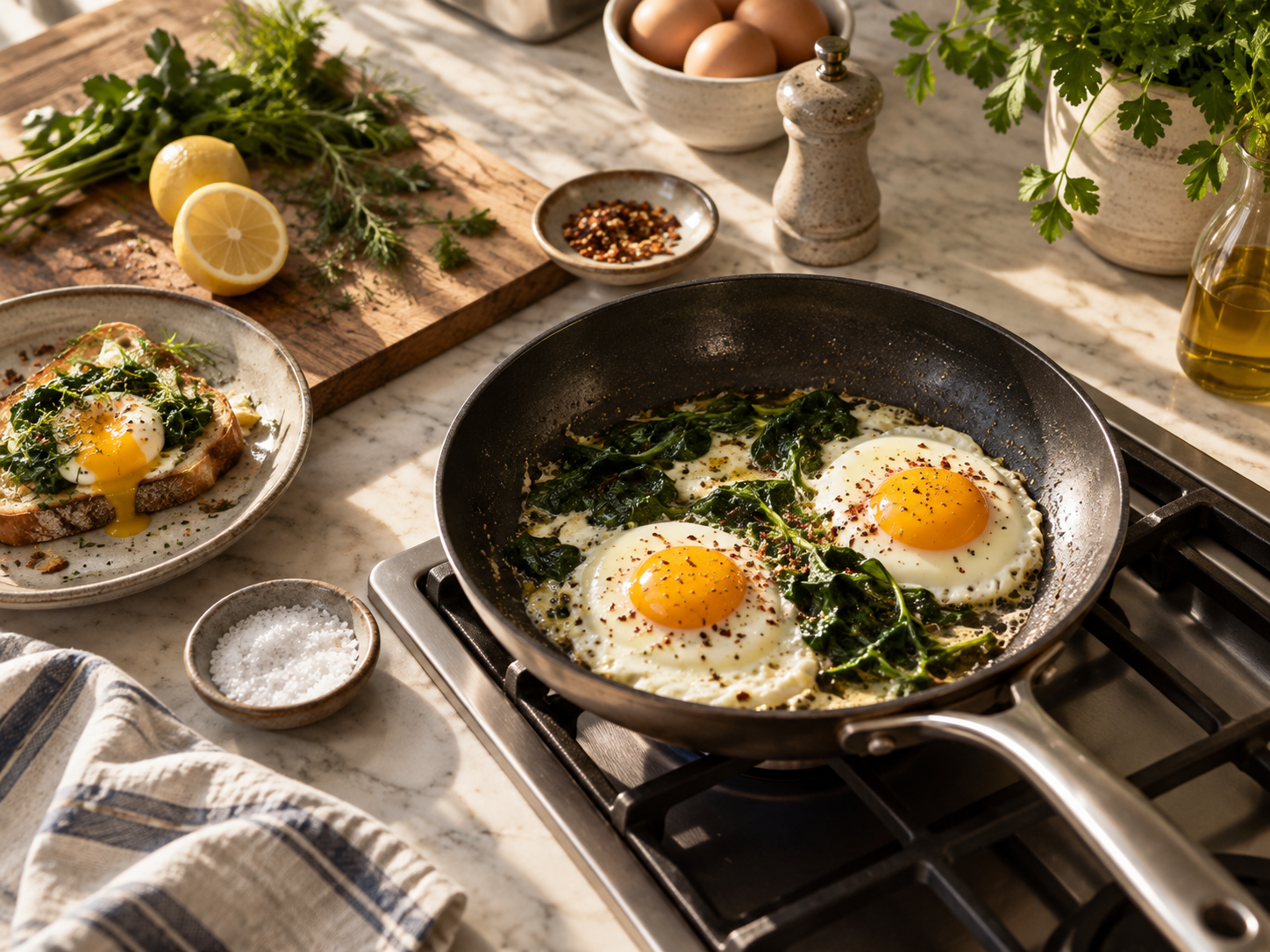
Editorial image of eggs and greens cooking in a generic skillet; not an image of the linked product.

Tradeoff: coating care and heat limits matter more than with bare stainless or cast iron.

Exact product · Tramontina Professional 12-Inch Nonstick

View the traditional nonstick option on Amazon Affiliate link
Ceramic nonstick

Best for · easy release with a specific coating preference

Tramontina Professional 12-Inch Ceramic Nonstick

Why this type: Ceramic nonstick over heavy-gauge aluminum, for gas, electric, and ceramic-glass cooktops; oven safe to 500°F. Tramontina states its ceramic cookware is made without intentionally added PTFE, PFOA, PFAS, lead, and cadmium.

Routine & Room analysis: A useful choice when easy release still matters and that specific material preference is central to the decision.

Tradeoff: use gentler heat and utensils; its longevity pattern differs from stainless steel or cast iron.

Exact product · Tramontina Professional 12-Inch Ceramic Nonstick

View the ceramic nonstick option on Amazon Affiliate link
Stainless steel

Best for · browning, searing, pan sauces

Tramontina Signature Tri-Ply Clad Stainless Steel 12-Inch

Why this type: 18/10 stainless steel with an aluminum core and tri-ply construction. Induction compatible and oven safe to 500°F. Model: 80116/007DS.

Routine & Room analysis: The durable, no-coating-wear path for searing, browning, and sautéing—if you are comfortable using technique and oil rather than expecting nonstick-style release.

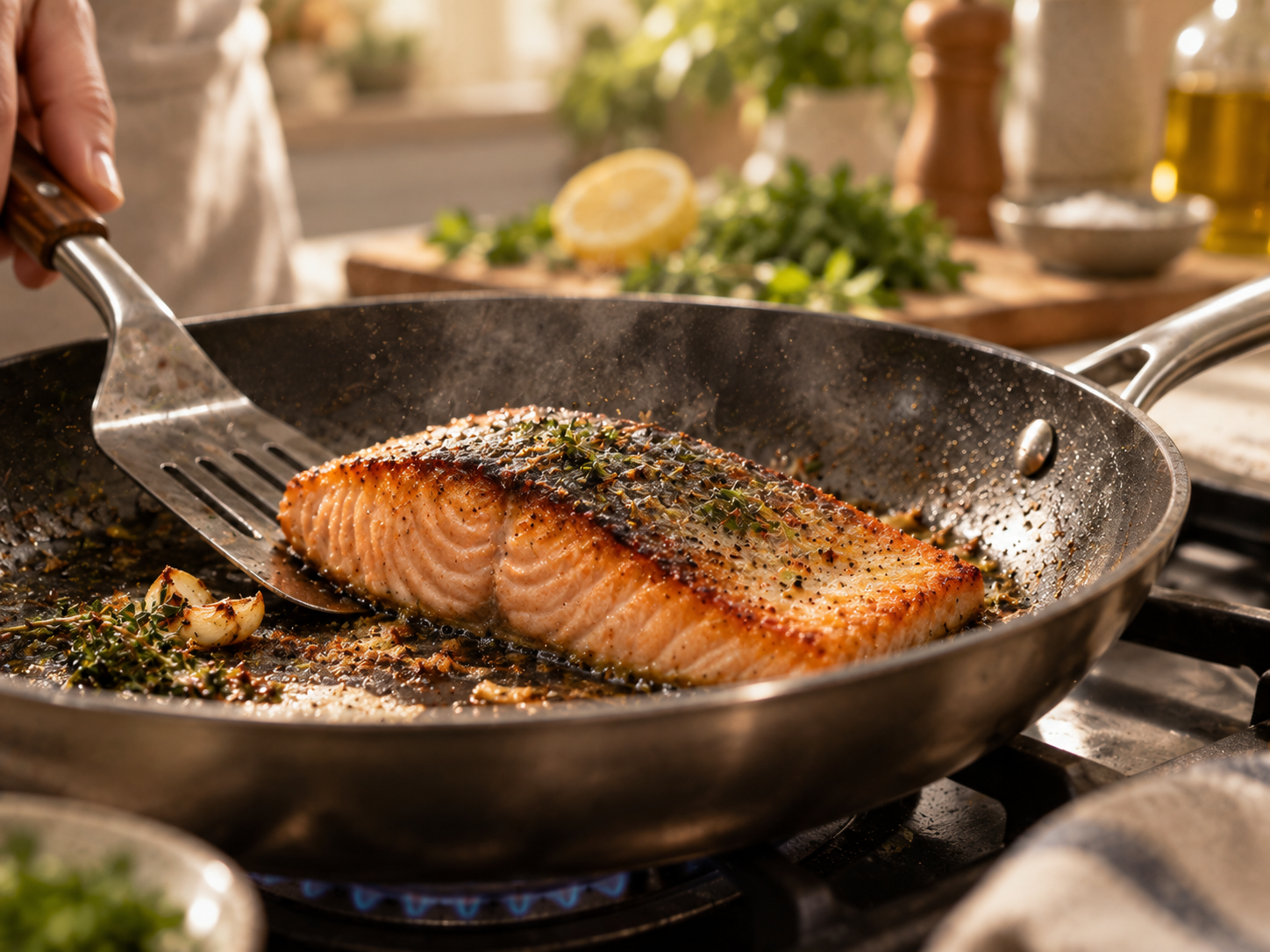
Editorial image of salmon browning in a generic frying pan; not an image of the linked product.

Tradeoff: the learning curve and cleanup can be higher for delicate foods.

Exact product · Tramontina Signature Tri-Ply Clad Stainless Steel 12-Inch

View the stainless steel option on Amazon Affiliate link

Cast iron

Best for · high heat, durability, heat retention

Lodge 10.25-Inch Cast Iron Skillet with Hot Handle Holder

Why this type: Cast iron seasoned with vegetable oil for heat retention. Lodge states its cookware is made without PFAS.

Routine & Room analysis: A durable, high-heat option when weight, drying, and occasional oiling feel manageable—not when you want a maintenance-free pan.

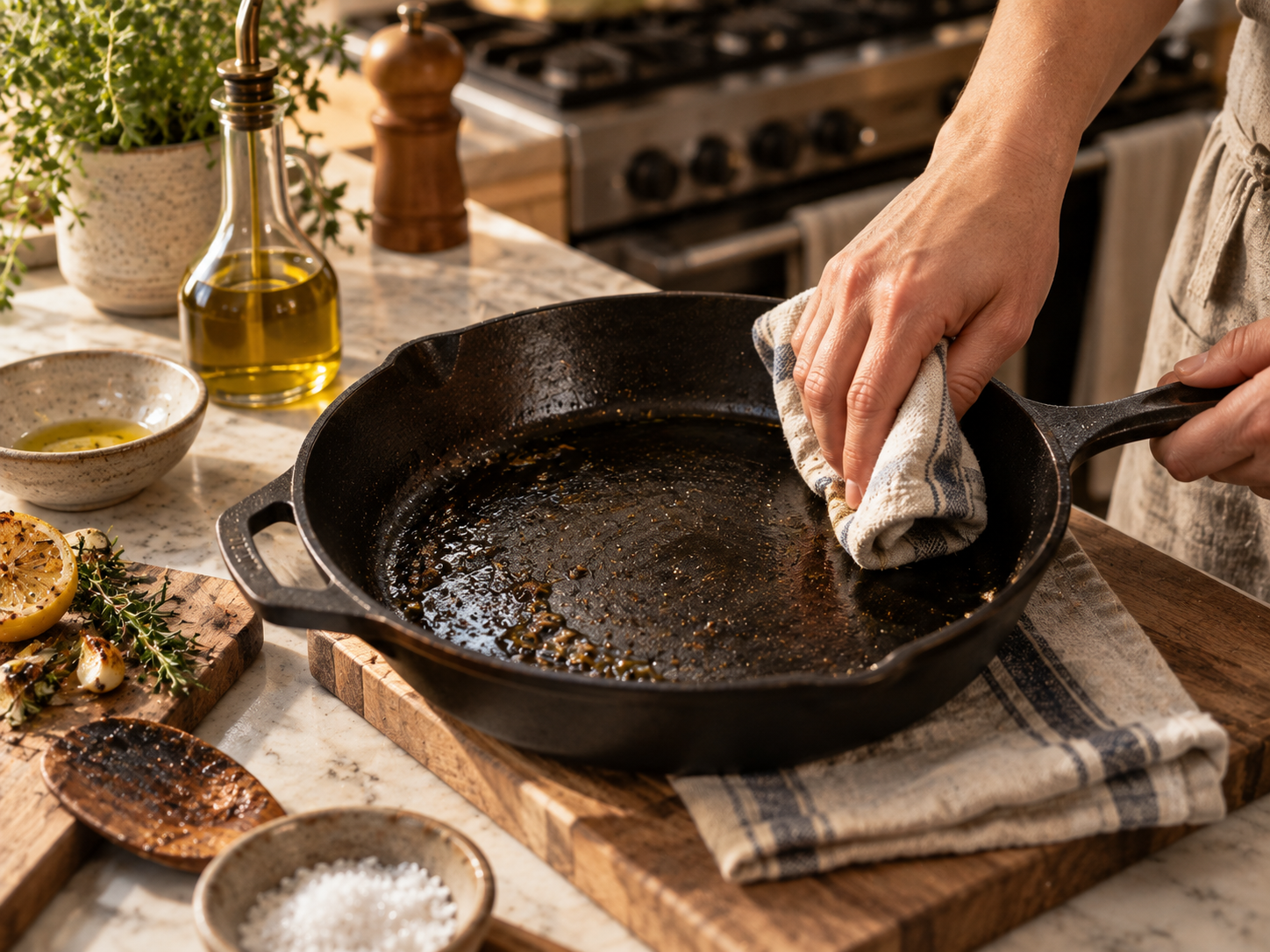
Editorial image of cleaning a generic cast-iron skillet after cooking; not an image of the linked product.

Tradeoff: it is heavier and asks for more care after cooking.

Exact product · Lodge 10.25-Inch Cast Iron Skillet with Hot Handle Holder

View the cast iron option on Amazon Affiliate link
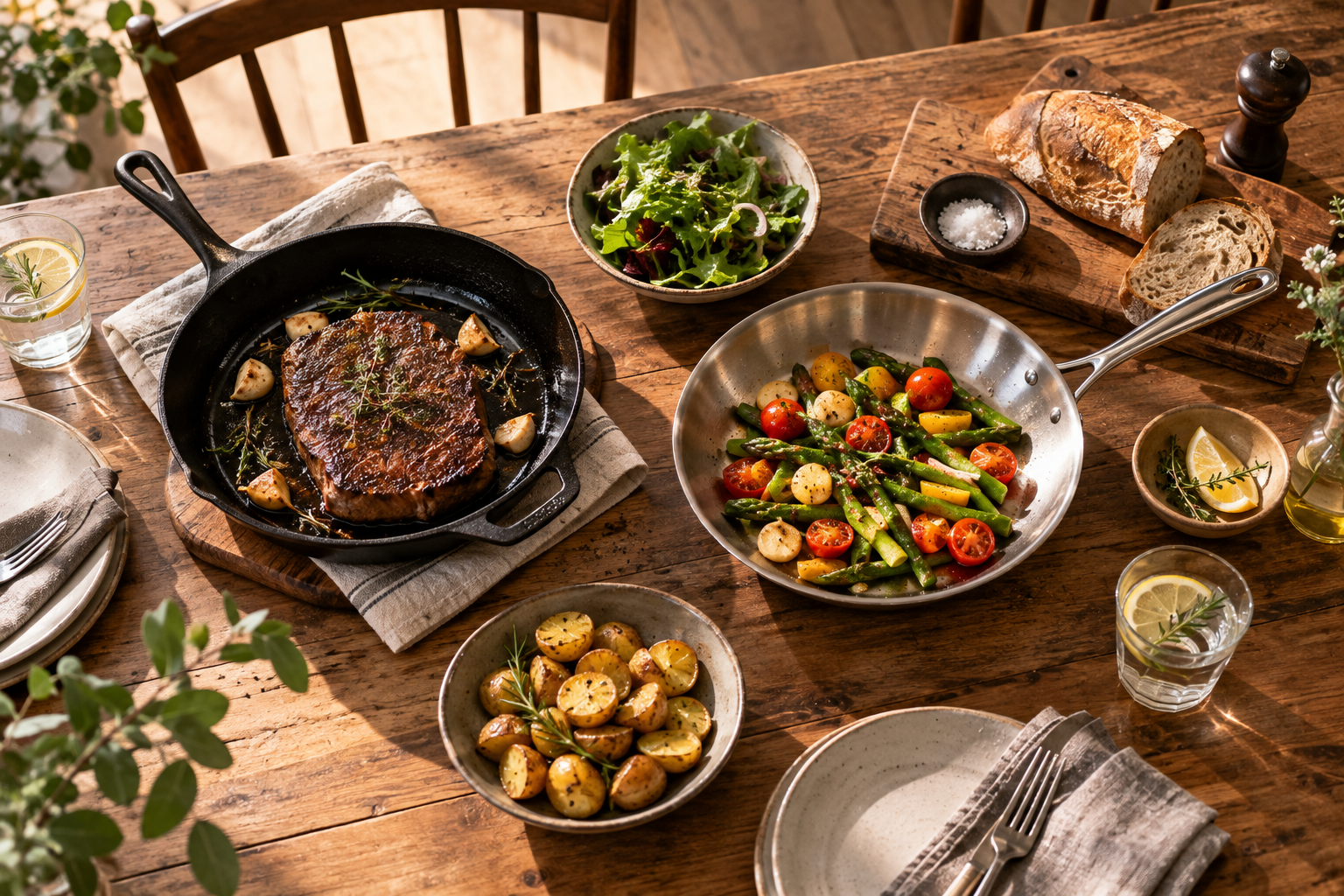
Editorial meal scene with a generic cast-iron skillet and a generic stainless-steel pan serving different cooking jobs; not images of linked products.

An honest alternative

One pan may be the wrong constraint.

If your week regularly asks for both delicate eggs and aggressive searing, a small nonstick pan plus a durable stainless steel or cast-iron pan may create less compromise than forcing one material to do both jobs.

Evidence & disclosure

This guide separates manufacturer-stated product facts from Routine & Room’s editorial analysis. We have not independently tested these products. Product availability and merchant details can change.

Affiliate disclosure · As an Amazon Associate, Routine & Room earns from qualifying purchases.